Road Tripping with Dogs: 10 Essential Safety Tips and Packing Checklist
Road trips can be wonderful adventures when your dog travels beside you. However, travelling with a pet requires more planning than simply putting them in the car. Safe transport, regular breaks, suitable food and emergency supplies all matter.
Road Tripping with Dogs: 10 Essential Safety Tips and Packing Checklist is designed to help dog owners prepare before setting off. With the right approach, you can reduce stress and make the journey safer for everyone.
Whether you are travelling for a weekend or taking a long-distance holiday, preparation makes a significant difference. Therefore, consider your dog’s personality, health, routine and travel experience before departure.
Why Preparation Matters When Road Tripping with Dogs
Dogs can react differently to travelling in a vehicle. Some become excited when they see the car. Others may feel nervous, restless or physically uncomfortable.
A little preparation can help your dog become familiar with travelling. Start with shorter journeys if your dog rarely travels by car. Gradually increase the journey length as they become more comfortable.
You should also check your planned route before leaving. Identify suitable stopping points where your dog can safely stretch, drink and relieve themselves.


Most importantly, never leave a dog unattended inside a parked vehicle. Temperatures can become dangerous quickly, even when the weather initially feels mild.
10 Essential Safety Tips for Road Tripping with Dogs
1. Use a Proper Dog Restraint
A dog should not move freely around the passenger compartment while the vehicle is moving. Sudden braking can cause serious injury.
A properly fitted vehicle harness, travel crate or secured carrier can help keep your dog safely contained. Choose equipment suitable for your dog’s size and build.
Never attach a seatbelt directly to a collar. A sudden stop can place dangerous pressure on the neck.
2. Help Your Dog Get Used to the Car
Do not make your dog’s first car experience a long motorway journey. Instead, begin with short trips around your local area.
Keep the experience calm and positive. Gradually increase travel time when your dog appears comfortable.
This approach can be particularly useful for dogs that become anxious around vehicles.
3. Take Regular Breaks
Dogs need opportunities to stretch their legs and drink water during longer journeys. Plan regular breaks rather than waiting until your dog becomes restless.
During each stop, use a lead before opening the vehicle door. Even a normally obedient dog can become frightened in an unfamiliar location.
A short walk can also help your dog relax before getting back into the car.
4. Keep Your Dog Hydrated
Always carry enough fresh water for the entire journey. Bring an additional supply in case of unexpected delays.
A portable bowl makes drinking easier during roadside stops. Some dogs may also drink more after walking or during warmer weather.
Avoid allowing your dog to drink from unfamiliar puddles. Contaminated water can cause stomach problems and other illnesses.
5. Never Let Your Dog Travel with Their Head Outside
Many dogs enjoy feeling the wind through an open window. However, allowing a dog to put its head outside can be dangerous.
Flying debris can injure their eyes, ears or face. A sudden movement could also create a serious accident.
Keep windows secure enough to provide ventilation without allowing your dog to escape or lean outside.
6. Keep Food and Medication Accessible
Your dog’s usual food should remain easy to reach during the journey. Avoid placing essential supplies underneath heavy luggage.
If your dog takes prescribed medication, keep it in a clearly labelled container. Carry enough for the journey and allow extra supplies for unexpected delays.
Keeping familiar food can also help maintain your dog’s normal routine.
7. Carry Identification Details
Before leaving, check that your dog’s identification information is current. Your contact details should be accurate if your dog becomes separated from you.
A collar tag can provide useful information. Microchipping also provides an additional method of identification where applicable.
Take a recent photograph of your dog before travelling. It can be useful if you need help locating them.
8. Prepare for Motion Sickness
Some dogs experience nausea during car journeys. Signs can include excessive drooling, lip licking, restlessness or vomiting.
Avoid giving your dog a large meal immediately before departure. Instead, follow their normal feeding routine and consider your journey timing.
If motion sickness is a recurring problem, speak with your vet before travelling. Do not give human medication unless a veterinary professional specifically recommends it.
9. Secure Your Luggage
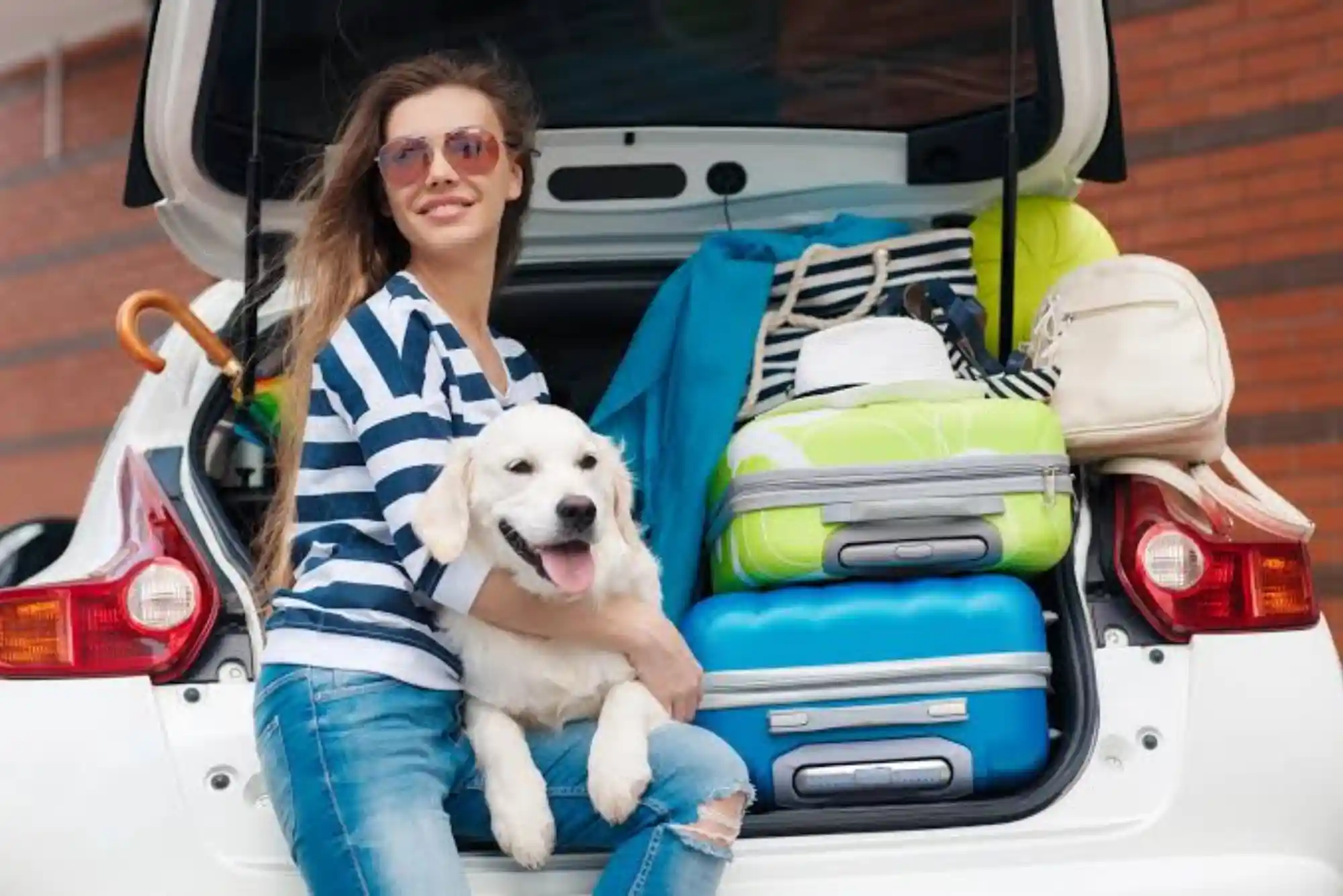
Loose luggage can become dangerous during sudden braking. Heavy bags can move forward with considerable force.
Keep luggage secured in the boot or another suitable storage area. Make sure it cannot fall onto your dog.
Your dog should also have enough space to sit, stand and adjust their position comfortably.
10. Plan Emergency Stops
Unexpected delays can happen on any road trip. Traffic, vehicle problems and weather can all change your schedule.
Keep an emergency kit where you can reach it quickly. Include basic first-aid supplies, water, food and your dog’s essential information.
It is also sensible to know where veterinary practices are located along longer routes.
Road Tripping with Dogs Packing Checklist
A good packing system makes travelling much easier. Rather than packing everything into one large bag, keep frequently needed items accessible.
| Essential Item | Why You Need It |
|---|---|
| Fresh water | Keeps your dog hydrated |
| Portable water bowl | Makes roadside drinking easier |
| Regular dog food | Maintains a familiar diet |
| Treats | Useful for rewards and reassurance |
| Lead and spare lead | Provides secure control during stops |
| Harness or travel restraint | Helps keep your dog secure |
| Collar and identification tag | Supports identification |
| Waste bags | Keeps stopping areas clean |
| Towels | Useful for wet or muddy dogs |
| Familiar blanket | Provides comfort during travel |
| Medication | Maintains your dog’s normal routine |
| Basic first-aid supplies | Helps with minor emergencies |
| Cleaning supplies | Useful for accidents and mess |
| Favourite toy | Provides familiarity and entertainment |
| Recent photograph | Helpful if your dog becomes lost |
Pack these items before departure rather than trying to purchase them during the journey. Familiar equipment can also make a new environment feel less stressful.
How Often Should You Stop When Travelling with a Dog?
There is no single stopping schedule that suits every dog. Age, health, temperament and journey conditions all affect their needs.
As a general approach, plan regular opportunities for your dog to drink, stretch and relieve themselves. Puppies, older dogs and dogs with specific health needs may require more frequent breaks.
Watch your dog rather than relying only on the clock. Excessive panting, whining, pacing or restlessness may indicate discomfort.
During each break, keep your dog on a lead in unfamiliar areas. Check the surroundings before allowing them to walk.
What Should You Do Before a Long Road Trip with a Dog?
Before a long journey, make sure your dog is comfortable with car travel. A few shorter practice trips can reveal problems before your main departure.
Check your dog’s usual food, medication and identification details. You should also confirm that your planned accommodation accepts dogs.
Research suitable walking areas along your route. This makes breaks easier and prevents unnecessary searching when you are already tired.
Finally, check the vehicle before departure. Tyres, fuel, fluids and general maintenance should all be addressed before a long trip.
How Can You Keep a Dog Calm During a Car Journey?
A familiar environment can help reduce travel anxiety. Bring your dog’s usual blanket or a familiar toy where appropriate.
Maintain a calm atmosphere inside the vehicle. Loud music and sudden movements may make some anxious dogs more uncomfortable.
Avoid rewarding signs of panic with excessive excitement. Instead, remain calm and provide reassurance when appropriate.
For dogs with severe travel anxiety, speak with your vet before the journey. A professional can advise you about suitable strategies.
Can Dogs Travel Long Distances in a Car?
Yes, many dogs can travel long distances when the journey is properly planned. However, their individual needs should determine the pace and duration of travel.
Long journeys require regular breaks, sufficient water and appropriate temperature control. Dogs should also remain safely restrained throughout the journey.
If your dog has a medical condition, consult your vet before planning an extended road trip. Additional preparation may be necessary.
What Should You Never Do When Road Tripping with Dogs?
Never leave your dog alone inside a parked vehicle. Avoid allowing your dog to travel unrestrained or sit where they could interfere with driving.
Do not open the car door without securing your dog first. An unfamiliar environment can trigger an unexpected escape.
You should also avoid making sudden changes to their food or routine during travel. Keeping familiar habits can make the journey more comfortable.
Making Road Trips Enjoyable for Your Dog
Safety should always come first, but enjoyment matters too. Dogs often benefit from opportunities to explore safe new environments.
Choose dog-friendly stops where possible. A short walk through a suitable area can break up a long period of sitting.
Bring familiar items from home. A favourite toy or blanket can provide comfort when everything around your dog feels unfamiliar.
Most importantly, pay attention to your dog’s behaviour. Their body language can tell you when they are tired, uncomfortable or ready for another break.
Conclusion: Make Every Journey Safer for Your Dog
Road Tripping with Dogs: 10 Essential Safety Tips and Packing Checklist provides a practical starting point for safer and more comfortable journeys. The key is preparation.
Use a suitable restraint, plan regular breaks and carry sufficient water. Keep identification, food and emergency supplies accessible throughout the trip.
Also, remember that every dog is different. Consider your dog’s age, temperament and individual needs before setting off.
With thoughtful planning, road trips can become enjoyable experiences for both you and your four-legged companion. Before your next adventure, use the packing table above and prepare your dog’s travel essentials in advance.
Start planning today, check your vehicle and create a dedicated dog travel bag before you hit the road.