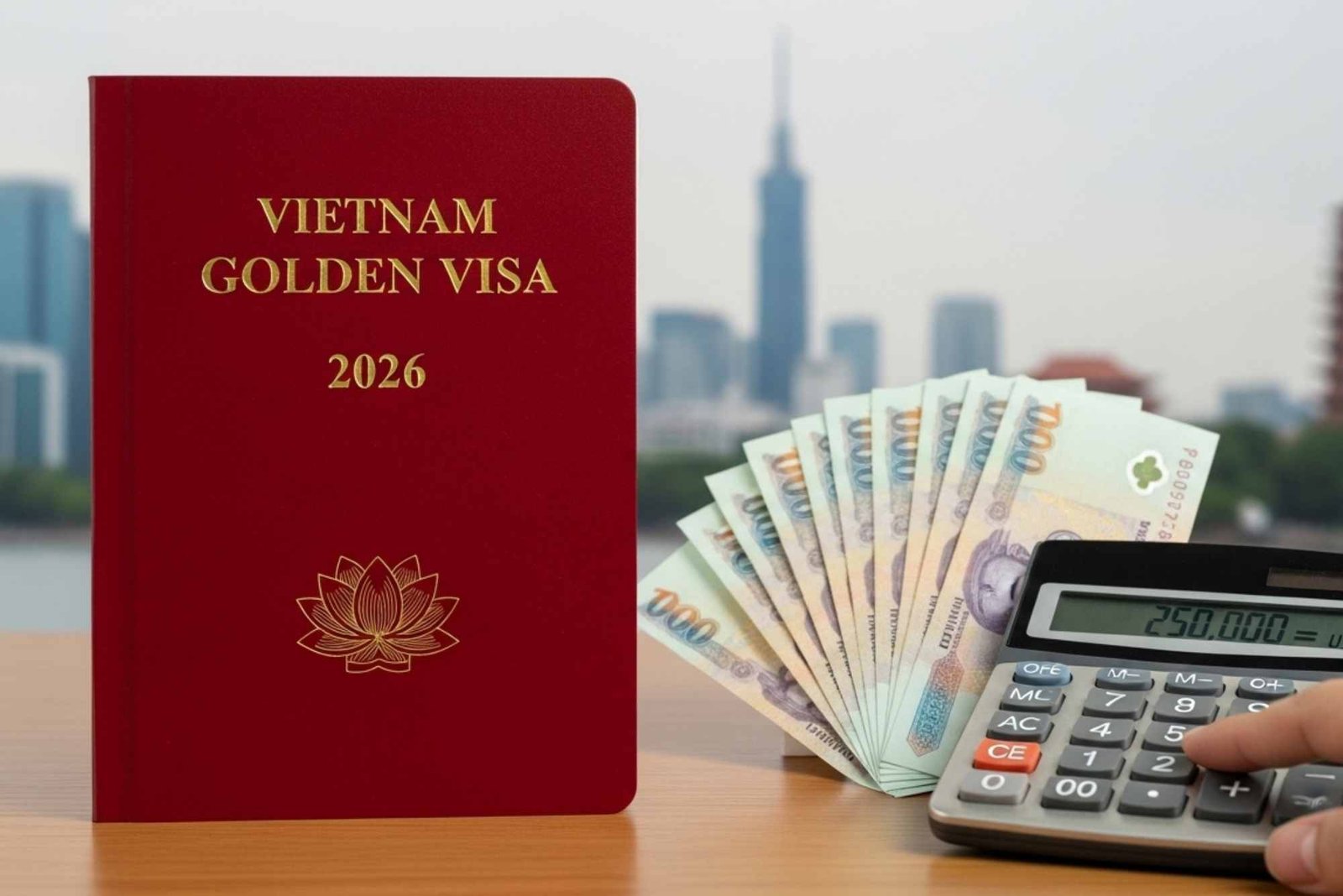
Vietnam is rapidly emerging as one of Asia’s most attractive destinations for investors, entrepreneurs, and long-term travelers. With its growing economy, affordable living, and investor-friendly policies, interest in long-term residency options—often referred to as the “Golden Visa”—has increased significantly.
What Is the Vietnam Golden Visa?
While Vietnam does not officially label it as a “Golden Visa,” the term is commonly used to describe long-term investment-based visas or residency pathways. These typically include:
- Investor visas (DT1, DT2, DT3, DT4 categories)
- Business visas with extended validity
- Temporary residence cards (TRC)
These visa options allow foreign nationals to stay in Vietnam for extended periods, often with multiple entry privileges and simplified renewals.
Vietnam Golden Visa Price in 2026
The cost of a Vietnam Golden Visa depends on the visa type, investment level, and processing method. Below is an updated estimate for 2026:
- Investor Visa Application Fee: $150 – $300
- Temporary Residence Card (TRC): $200 – $500
- Visa Stamping Fee: $25 – $135
- Agency / Legal Processing Fees: $300 – $1,000
Total Estimated Cost in 2026: $500 – $1,800


These costs can vary depending on whether you apply independently or through a legal consultancy.
Vietnam Visa Price Trends (2015–2026)
Understanding historical price trends helps applicants anticipate future changes and make informed decisions. Below is a detailed table showing estimated Vietnam long-term visa and investor visa costs over the past decade.
| Year | Estimated Visa Cost (USD) | Notes |
|---|---|---|
| 2015 | $200 – $400 | Basic investor visas introduced with limited options |
| 2016 | $250 – $450 | Slight increase due to policy updates |
| 2017 | $300 – $500 | Improved visa categories for investors |
| 2018 | $350 – $600 | Introduction of longer-term business visas |
| 2019 | $400 – $700 | Higher demand increases processing costs |
| 2020 | $450 – $800 | COVID-19 restrictions impacted visa availability |
| 2021 | $500 – $900 | Limited approvals; higher administrative fees |
| 2022 | $550 – $1,000 | Post-pandemic reopening increases demand |
| 2023 | $600 – $1,200 | Expanded investor visa categories |
| 2024 | $650 – $1,400 | Digital processing introduced |
| 2025 | $700 – $1,600 | More streamlined residency pathways |
| 2026 | $500 – $1,800 | Flexible pricing based on investment and services |
This upward trend reflects Vietnam’s growing popularity among international investors and digital nomads.
Types of Vietnam Investor Visas
DT1 Visa
Issued to investors with capital contributions exceeding $4 million. Offers the longest stay duration and fastest path to residency.
DT2 Visa
For investments between $2 million and $4 million. Suitable for medium-scale investors.
DT3 Visa
For smaller investments starting around $130,000. Most popular option among foreign entrepreneurs.
DT4 Visa
Entry-level investment visa with minimal capital requirements but shorter validity.
Additional Costs to Consider
Beyond the visa fee, applicants should budget for:
- Document translation and notarization
- Business registration costs
- Legal consultancy services
- Renewal and extension fees
These can add an additional $300 to $1,000 depending on complexity.
Application Process Overview
- Choose the appropriate visa category
- Prepare investment or business documentation
- Submit application through Vietnam Immigration Department
- Pay visa and processing fees
- Receive visa approval and complete stamping
Processing times typically range from 5 to 15 working days.
Why Vietnam Is Attracting Investors
Vietnam’s appeal goes beyond affordability. Key factors include:
- Strong economic growth
- Low cost of living
- Strategic location in Southeast Asia
- Expanding startup ecosystem
These advantages make the Vietnam Golden Visa an attractive option compared to similar programs worldwide.
Expert Insights: Is It Worth the Cost?
From an investment perspective, the Vietnam Golden Visa offers excellent value. Compared to European Golden Visa programs costing hundreds of thousands of dollars, Vietnam provides a significantly lower entry point.
However, applicants should carefully evaluate their goals—whether it’s business expansion, relocation, or long-term residency—before committing.
Final Thoughts
The Vietnam Golden Visa price in 2026 reflects the country’s rising global appeal. While costs have gradually increased over the years, they remain competitive compared to other investment-based visa programs.
By understanding the full fee structure and historical trends, applicants can make informed decisions and plan their investment journey more effectively.
As Vietnam continues to evolve economically and politically, visa policies may further adapt—making now a strategic time to explore long-term residency options.
Related Reading: Visa 18 Kuwait Price in 2026: Visa Charges and Fee Guide
Related Reading: Uzbekistan Visa Price for Afghanistan in 2026: Visa Charges and Fee Guide