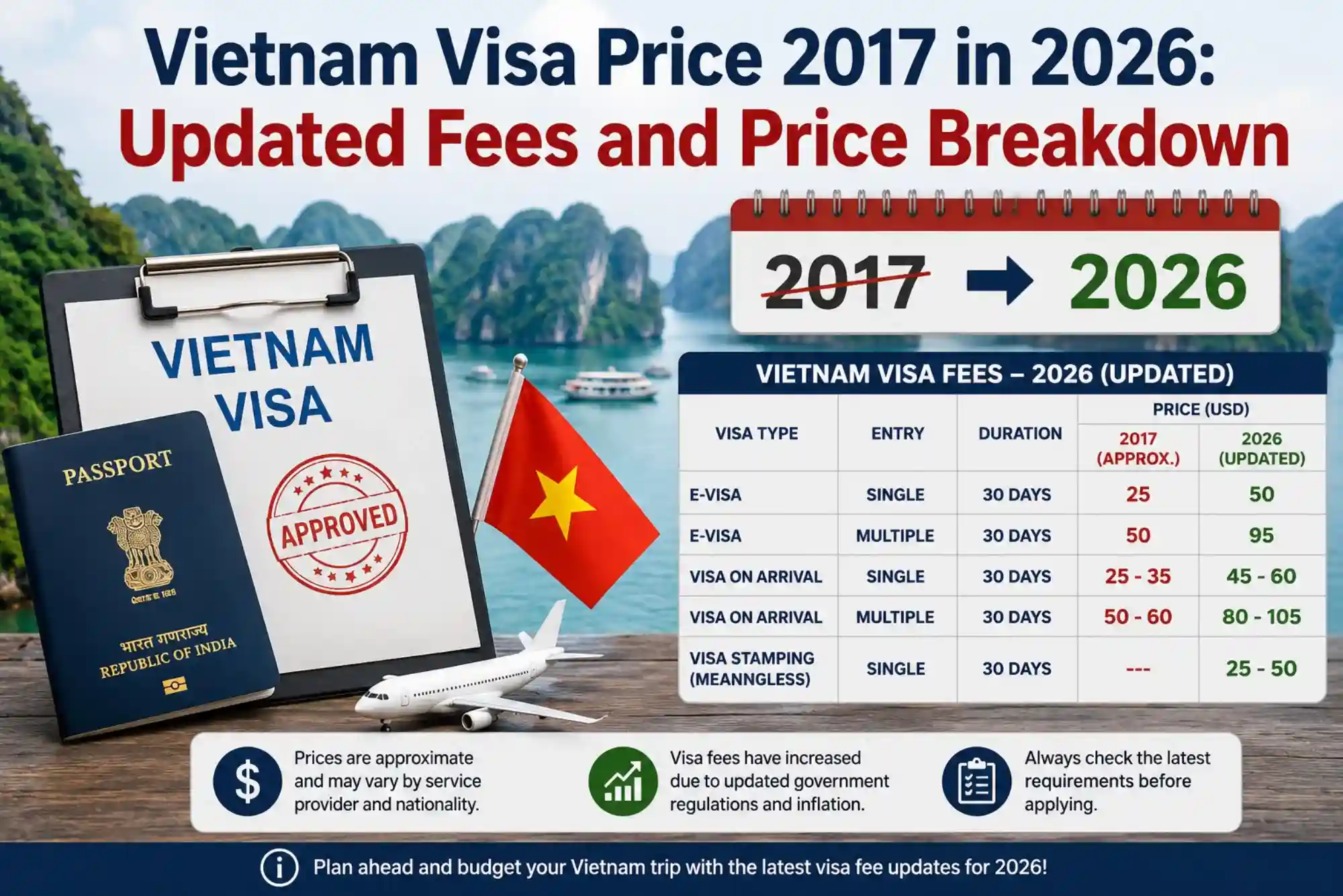
However, visa pricing has evolved significantly from 2017 to 2026, influenced by digital transformation, policy changes, and global travel trends. In this guide, we provide a complete breakdown of Vietnam visa prices over the years, including a detailed table, current costs, and expert insights to help travelers plan smarter.
Vietnam Visa Price History (2017–2026)
The following table outlines the estimated Vietnam visa prices over the years. These figures are based on standard tourist visa categories (single-entry and e-visa options) and reflect general pricing trends.
| Year | Visa Type | Average Price (USD) | Notes |
|---|---|---|---|
| 2017 | Single Entry (VOA) | $45 | Visa on arrival was widely used |
| 2018 | Single Entry (VOA) | $45 | Stable pricing, tourism growth |
| 2019 | Single Entry (VOA) | $45 | Peak tourism period |
| 2020 | Limited Entry | $25–$50 | COVID-19 restrictions impacted travel |
| 2021 | E-Visa Introduced | $25 | Digital visa adoption increased |
| 2022 | E-Visa | $25–$50 | Tourism recovery phase |
| 2023 | E-Visa (Extended) | $25–$50 | Longer stay options introduced |
| 2024 | E-Visa | $25–$60 | Processing fees varied |
| 2025 | E-Visa | $25–$75 | Increased demand and service charges |
| 2026 | E-Visa / Tourist Visa | $25–$90 | Updated pricing based on processing type |
Vietnam Visa Price in 2026: What to Expect
As of 2026, Vietnam visa pricing depends on the type of visa, duration of stay, and processing method. The most common option is the e-visa, which is both cost-effective and convenient.
Standard Visa Costs
- Single-entry e-visa (30–90 days): $25–$50
- Multiple-entry visa: $50–$90
- Urgent processing fees: Additional $20–$50
For a deeper breakdown of current charges, travelers can refer to this detailed guide on Vietnam tourist visa pricing in 2026.
Key Factors Influencing Vietnam Visa Prices
1. Government Policy Changes
Visa fees are primarily regulated by Vietnamese immigration authorities. Policy updates, especially those related to tourism promotion or economic adjustments, directly impact pricing.


2. Shift to Digital Visa Systems
The introduction of e-visas significantly reduced processing complexity but introduced service fees in some cases. This shift explains the relatively stable base fee but variable total cost.
3. Travel Demand and Seasonality
During peak travel seasons, service providers may increase processing charges, especially for urgent visa requests.
4. Third-Party Service Providers
Many travelers opt for agencies to simplify the process, which adds service fees on top of official visa charges.
Comparing Vietnam Visa Costs with Other Countries
Vietnam remains one of the more affordable destinations when it comes to visa costs. Compared to countries like the UK, USA, or UAE, Vietnam’s visa fees are relatively low.
For example, travelers comparing international visa costs may also find it helpful to review UK visit visa pricing from Pakistan or explore broader insights on USA visa costs in 2026.
Visa Types and Their Cost Differences
Tourist Visa
The most commonly used visa, ideal for short-term stays and travel purposes. It offers flexible pricing depending on entry type.
Business Visa
Typically more expensive than tourist visas, as they require additional documentation and longer validity.
E-Visa
The most convenient and affordable option in recent years, processed entirely online with minimal paperwork.
Tips to Save Money on Vietnam Visa Fees
- Apply early to avoid urgent processing charges
- Use official government portals instead of third-party agencies
- Choose single-entry visas if you don’t plan multiple visits
- Avoid peak travel seasons when service fees increase
Future Trends in Vietnam Visa Pricing
Looking ahead, Vietnam is expected to continue simplifying its visa process while maintaining competitive pricing. With tourism playing a key role in the country’s economy, visa fees are likely to remain affordable, though minor increases may occur due to operational costs and inflation.
Recent updates also highlight changes in pricing structures, which are further explained in this analysis of Vietnam visa price increases in 2026.
Conclusion
From 2017 to 2026, Vietnam visa prices have remained relatively stable, with gradual adjustments driven by digitalization and global travel dynamics. The introduction of e-visas has made the process more accessible and cost-effective for travelers worldwide.
Whether you’re planning a short vacation or an extended stay, understanding the historical pricing trends and current costs can help you budget effectively and avoid unnecessary expenses.
Vietnam continues to offer one of the best value-for-money travel experiences, and with the right planning, securing your visa can be both simple and affordable.